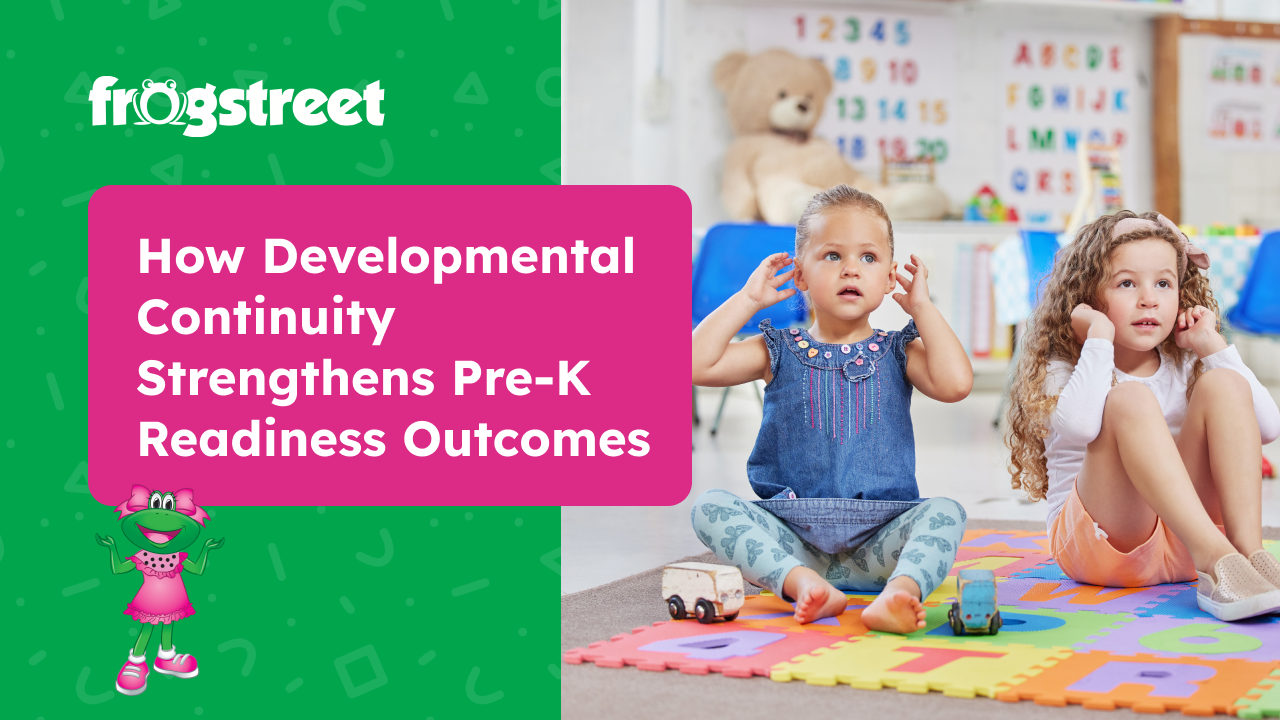
You may already see how development carries forward across your classrooms. Children enter new environments with confidence, curiosity, and familiar learning habits that support their participation in daily routines.
When classrooms reinforce shared routines, language, and expectations, children build on experiences they already understand. Development grows steadily as children move through each stage of early learning.
Developmental continuity creates this connected pathway. When birth-to-five classrooms align intentionally, children carry their skills forward from one classroom to the next, and Pre-K readiness becomes the natural result of years of development.
These connections allow teachers to extend learning earlier and help children move confidently into each new stage of their early learning journey.
Why Developmental Continuity Matters for Pre-K Readiness
Developmental continuity helps children build skills gradually from infancy through Pre-K, allowing them to enter Pre-K classrooms confident, curious, and ready to participate in learning.
You may recognize this progression when children move easily between classrooms. Children settle into routines quickly because they recognize the structure of the learning environment. This familiarity allows teachers to extend learning earlier in the year.
Programs that support pre-k readiness continuity observe encouraging patterns.
- Children enter new classrooms with curiosity and confidence.
- Teachers extend learning rather than reintroducing basic routines.
- Emotional language remains familiar across age groups.
- Classroom participation begins quickly.
- Children demonstrate growing independence.
When your classrooms reinforce development across age groups, children carry learning momentum forward.
When Learning Builds Across the Birth-to-Five Journey
Children experience development as a connected pathway. Each classroom reinforces earlier experiences while introducing new opportunities for growth. You may notice how children apply familiar learning habits as they encounter new activities and materials.
Birth-to-five curriculum alignment allows children to strengthen skills over time as learning experiences expand across infancy, toddlerhood, preschool, and Pre-K. Teachers guide this progression through intentional routines and learning environments.
This alignment supports early childhood developmental progression and strengthens scaffolding. Children practice skills repeatedly while expanding their understanding through new experiences.
When classrooms build on one another’s work, children experience learning as a continuous journey. Confidence grows alongside curiosity.
How Does Birth-to-Five Curriculum Alignment Support Development?
Birth-to-five curriculum alignment supports development by connecting learning experiences across classrooms, so children strengthen skills over time rather than having to restart them each year.
Teachers reinforce shared developmental goals while adjusting activities for each stage of growth. When your educators understand how learning evolves across age groups, they can more intentionally extend children’s skills.
Aligned classrooms often share several characteristics.
- Emotional language appears consistently across classrooms.
- Learning experiences gradually increase in complexity.
- Teachers reference earlier classroom routines and expectations.
- Children recognize how classroom activities unfold.
- Development grows through reinforcement rather than repetition.
These patterns support integrated early childhood curriculum design and help children understand how learning works across environments.
The Language That Helps Children Feel Secure
Language shapes how children understand classroom experiences. When your educators use consistent language to guide emotions, routines, and expectations, children recognize how to respond in new situations.
Shared vocabulary across classrooms strengthens SED alignment across age groups. Children carry emotional language with them as they move from one classroom to the next.
Teachers often observe that this consistency strengthens peer interactions. You may notice children using familiar emotional vocabulary to solve problems, express feelings, and participate in group routines.
This shared language supports confidence and independence across the early years.
What Helps Children Transition Confidently Between Classrooms?
Children transition more confidently when routines, expectations, and emotional language remain consistent across classrooms.
Transitions mark important milestones in early childhood programs. Children move into new classrooms as their abilities grow. When your classrooms share familiar structures, children recognize how the learning environment works.
Strong toddler-to-preschool transition support helps children maintain learning momentum.
- Children respond quickly to transition cues.
- Classroom participation begins early in the year.
- Emotional regulation remains steady during adjustment periods.
- Teachers begin extending learning quickly.
- Children explore materials and activities confidently.
These signals show how continuity in infant-toddler preschool curricula supports smooth classroom transitions.
Recognizing the Signals of Developmental Alignment
Teachers often recognize developmental continuity through everyday classroom interactions. Children demonstrate skills that reflect experiences from earlier environments. You may see these signals during routines, group activities, and peer interactions.
Programs that support infant-toddler preschool curriculum continuity often notice encouraging patterns.
- Children recognize familiar routines and expectations.
- Emotional vocabulary appears during peer interactions.
- Children begin activities confidently without extended explanation.
- Teachers expand learning rather than revisiting earlier skills.
- Classroom environments feel engaged and collaborative.
When you observe these patterns, you are often seeing early childhood developmental progression in action.
Helping Families See the Developmental Journey
Families appreciate understanding how early learning supports long-term development. Parents often want to see how experiences in your classrooms prepare children for the next stage of learning.
Programs that support integrated early childhood curriculum alignment help families understand the full developmental pathway. Teachers can explain how communication, emotional awareness, and independence strengthen across the years.
This clarity strengthens trust between families and educators. When families understand the developmental journey, they often feel more confident supporting their child’s learning at home.
Frequently Asked Questions
What is developmental continuity in early childhood education?
Developmental continuity means learning experiences connect from infancy through Pre-K. Children build skills gradually across classrooms instead of restarting learning at each stage. Familiar routines and language help children move confidently between classrooms.
Why is birth-to-five curriculum alignment important?
Birth-to-five curriculum alignment ensures that learning builds across age groups. Teachers reinforce developmental skills over time so children experience a consistent learning journey.
How does developmental continuity support Pre-K readiness?
Developmental continuity supports Pre-K readiness by strengthening communication, emotional development, and independence across the early years. Children enter Pre-K prepared to participate in collaborative learning.
What helps children transition smoothly between classrooms?
Children transition smoothly when routines, language, and expectations remain familiar. Consistent cues help children recognize classroom patterns and adapt quickly.
How can educators improve classroom alignment?
Educators strengthen alignment by sharing developmental language, collaborating across classrooms, and reinforcing SED strategies that children recognize as they grow.
Support Children’s Learning Pathway from Infancy to Pre-K with Frog Street
Developmental continuity shapes how confidently children grow across the early years. When learning experiences connect across infancy, toddlerhood, preschool, and Pre-K, children carry familiarity, curiosity, and independence into every new classroom. Pre-K readiness grows naturally when development unfolds through steady progression.
Many leaders already recognize these patterns within their programs. You may see children responding to familiar routines, shared language, and learning habits as they move between classrooms. When these connections are reinforced across age groups, development feels steady, purposeful, and supportive for both children and educators.
If you are exploring how developmental continuity appears across the classrooms in your program, the Developmental Continuity Toolkit can help you notice how learning builds from one stage to the next. The Alignment Reflection Checklist also offers a simple way for your team to reflect on routines, language, and expectations that help children carry learning confidently across the birth-to-five journey.
As you continue strengthening these connections, resources like the Smooth Transitions Guide and the Developmental Alignment Patterns Guide can help your team recognize the signals of developmental progression across age groups.
With strong developmental connections across classrooms, children move into Pre-K with confidence, curiosity, and the readiness to keep learning.