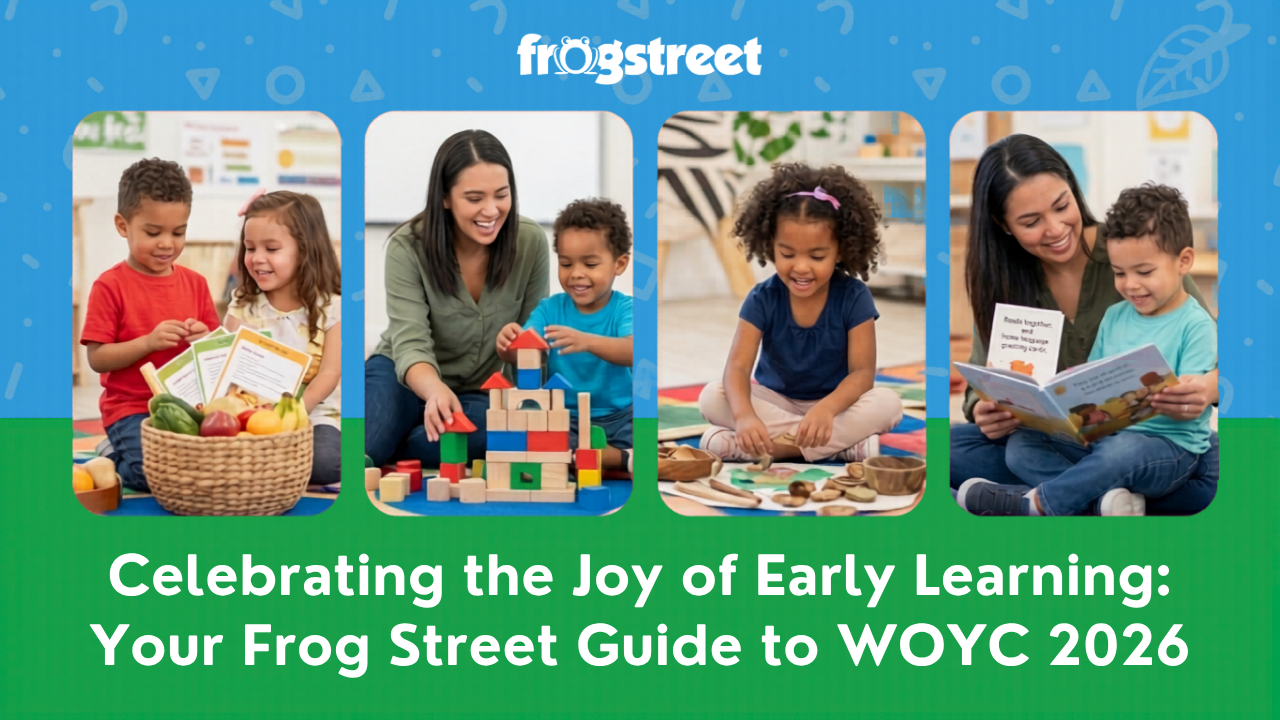
The Week of the Young Child (WOYC) is a meaningful opportunity for educators to celebrate early learning, strengthen classroom connections, and engage families.
If you are planning Week of the Young Child 2026 activities, this guide offers simple, flexible ideas you can use across infant, toddler, preschool, and Pre-K settings to support development, encourage participation, and create joyful learning experiences.
For educators, WOYC is more than a themed week. It is a chance to create experiences that help children feel connected, confident, and actively engaged in their learning.
At Frog Street, we believe those moments happen when learning is hands-on, meaningful, and reflective of each child’s unique identity, language, and experiences.
Music Monday Activities | April 13
Music supports language development, memory, and self-expression while helping children connect with others in joyful and meaningful ways across early childhood settings.
Try this:
Create a classroom music experience where children choose how they want to participate. Younger children may explore sounds and movement, while older children might sing, clap, use instruments, or create their own rhythm patterns. Invite children to share a favorite song from home or introduce music in their home language.
How this supports learning:
Music builds vocabulary, strengthens memory, and supports self-expression while helping children feel seen and included.
Tasty Tuesday Activities | April 14
Food-based learning connects literacy, math, and science in ways that feel natural and relevant to children’s daily experiences.
Try this:
Guide children through a simple food or snack experience. Younger children can explore textures and observe, while older children can help choose ingredients, follow picture recipe steps, scoop, pour, mix, and serve. Invite families to share foods or ingredients that reflect their culture or traditions.
How this supports learning:
Hands-on food experiences build vocabulary, support sequencing and problem-solving skills, and create meaningful connections between home and school.
Work Together Wednesday Activities | April 15
Collaborative learning experiences help children build communication, cooperation, and problem-solving skills while learning how to interact with others.
Try this:
Invite children to work together to create or build something that reflects their environment or experiences. Younger children may explore side-by-side play, while older children can take on roles to design and build shared spaces.
How this supports learning:
Collaboration supports social and emotional development, encourages communication, and helps children practice sharing ideas and solving problems.
Artsy Thursday Activities | April 16
Open-ended art experiences support creativity, fine motor development, and self-expression while giving children the freedom to explore their ideas.
Try this:
Offer a variety of materials such as paint, paper, fabric, or natural items. Younger children may explore materials through sensory play, while older children can create representations of their experiences, families, or favorite places.
How this supports learning:
Process-focused art builds confidence, supports communication, and encourages children to express their identity in meaningful ways.
Family Friday Activities | April 17
Families are children’s first and most important teachers. Creating opportunities for family participation strengthens connection and builds a sense of belonging.
Try this:
Invite families to participate in ways that work for them. This may include sharing a story, song, or message. Children can help decide how their family is included, creating a more meaningful connection.
How this supports learning:
When families are included, children feel supported, valued, and more connected to their learning environment.
Why Week of the Young Child Activities Matter
The Week of the Young Child is more than a celebration. It is an opportunity to:
- Support active, hands-on learning
- Strengthen relationships in the classroom
- Reflect children’s cultures and identities
- Build meaningful family engagement
The most impactful Week of the Young Child activities are those that give children voice, choice, and opportunities to connect their learning to real experiences.
Frequently Asked Questions About Week of the Young Child
What is the Week of the Young Child?
The Week of the Young Child is an annual celebration focused on recognizing the importance of early childhood education and the role educators and families play in supporting young children’s development.
When is Week of the Young Child 2026?
Week of the Young Child 2026 takes place in April, with themed days such as Music Monday, Tasty Tuesday, Work Together Wednesday, Artsy Thursday, and Family Friday.
What are examples of Week of the Young Child activities?
Examples include music and movement activities, food exploration, collaborative play, open-ended art, and family engagement experiences that connect learning to children’s real lives.
Creating Meaningful WOYC Experiences in Your Classroom
As you plan your Week of the Young Child 2026 activities, focus on creating experiences that are engaging, inclusive, and meaningful for every child.
When children are given opportunities to explore, make choices, and connect their learning to their own experiences, they become more confident, more engaged, and better prepared for what comes next.
How will you bring Week of the Young Child to life in your classroom this year?