
How to Use Research Evidence in a Curriculum Evaluation or Board Presentation
Bringing research into a curriculum evaluation is one step. Using that research in a board presentation requires a different level of clarity. In formal decision-making settings, research must be communicated in a way that supports explanation, justification, and confidence. Board members focus on outcomes, relevance, and whether the evidence holds up under scrutiny. The value of the research depends on how clearly it is presented and how accurately it reflects the study. Three moments tend to define how research is received. A study must be referenced without extending its conclusions. An ESSA designation must be explained in terms that connect to funding and accountability. Findings must be organized so they strengthen a recommendation rather than complicate it. The goal is to make the evidence clear, usable, and defensible. What Makes Research Usable in a Formal Curriculum Decision? Research becomes usable when it directly answers the questions guiding the decision. Those questions are consistent. Does the evidence show measurable gains in kindergarten readiness? Was the study conducted in a setting that reflects actual classrooms? Can the findings be explained clearly in a board discussion or funding review? The most relevant research meets these conditions. It is conducted by an independent institution, which establishes credibility. It takes place in real classroom environments, where implementation reflects typical conditions. It measures outcomes that align with how children are assessed at kindergarten entry across developmental domains, including Social-Emotional Development (SED). When research is conducted in a large, diverse public school district under real classroom conditions, the findings provide insight into how curricula function in practice. That context supports interpretation because it mirrors the conditions under which decisions are made. Research becomes usable when it can move from documentation to explanation without losing accuracy. If findings are clearly described, linked to outcomes, and supported with context, they can carry through a board discussion with confidence. For curriculum leaders, this is the operational test: can the research support the recommendation, withstand questions, and connect to instructional, funding, and accountability priorities? How Should a Quasi-Experimental Study Be Explained Without Overstating Its Findings? A quasi-experimental study should be clearly explained while remaining within the research’s limits. Start with a direct description of the design. Researchers compared outcomes for children across two preschool curriculum groups, then measured readiness at kindergarten entry. This provides a clear structure without relying on technical language. Example language: “This study compares children in two similar groups and looks at how prepared they were for kindergarten after experiencing different curricula.” Next, present findings using precise language. Statements such as “the study found” or “the results indicate” accurately reflect the research. Avoid extending conclusions beyond the data, since quasi-experimental studies show meaningful differences but do not establish universal outcomes across all contexts. Example language: “The results indicate a measurable difference in readiness between the two groups, based on the design of the study.” Context strengthens the explanation. Including the study setting, population, and comparison conditions helps clarify how the findings should be interpreted and applied. Example language: “Because this study was conducted in a large public school district, the findings reflect real classroom conditions that may be similar to those in many districts.” This kind of language protects credibility. It communicates the value of the findings without implying that the same results are guaranteed in every setting. Additional methodology details, comparison conditions, and statistical findings are available in the full Johns Hopkins study report. What Does ESSA Tier 3 Mean in a Board-Level Conversation? ESSA Tier 3 indicates that a curriculum has promising evidence of a positive impact based on a well-designed study. ESSA stands for the Every Student Succeeds Act, a federal law that sets expectations for how schools use research to support funding and accountability decisions. In a board-level conversation, ESSA helps answer a practical question: Does this research meet a recognized standard that allows it to be used in funding applications and curriculum approvals? A Tier 3 designation means the study provides promising evidence of impact under real classroom conditions. This designation is assigned by the study’s researchers, not by Frog Street, ensuring the rating reflects the research rather than the curriculum provider. ESSA Tier 3 helps link curriculum selection to Title I documentation, grant applications, and other approval processes that require evidence-based justification. When presented as a credential, it reinforces that the decision is grounded in research that meets established criteria. Programs preparing for funding reviews or curriculum approval discussions can reference the ESSA Tier 3 certificate directly. How Can Research Findings Be Presented Clearly Without Losing Important Context? Clarity comes from focusing on what the findings mean while preserving the conditions in which they were produced. Effective presentations highlight a limited set of results that directly support the decision. These typically include overall readiness outcomes, results across developmental domains, and patterns that reflect the populations being served. Each finding should include an interpretation. A metric alone does not convey meaning; a clear explanation of what it represents helps the audience understand its significance. For example, research findings can be translated in a way that maintains accuracy while improving clarity: An overall effect size of +0.26 can be described as a meaningful difference in kindergarten readiness between groups A subgroup effect size of +0.62 for English learners can be presented as a larger observed difference within that population, statistically significant at p < .001 The English learner (ELL) subgroup was smaller than the overall sample, which should be considered when interpreting this result. Referencing the study context, such as a large public school district, helps connect findings to real classroom conditions Example language: “The study found a meaningful improvement in overall readiness, with an even larger observed difference for English learners, although that subgroup was smaller and should be interpreted with that context in mind.” Presenting findings in this way allows the audience to understand both scale and context while keeping the data grounded in the study. The Decision-Maker’s Guide to the Guilford County Efficacy Study can help carry this research into
What The Data Shows: A Plain-Language Guide To The Frog Street Guilford County Efficacy Study
A kindergarten educator reviewing intake assessments at the start of the school year sees the data before she meets the children. The data tells part of the story, but they don’t say whether the preparation those children received was grounded in evidence and supported through intentional curriculum implementation or simply in tradition. Fortunately, independent research can now tell educators how prepared children are for the next step. That is why independent research matters. It gives educators, district leaders, and decision-makers a clearer way to understand whether a curriculum is connected to measurable kindergarten-readiness outcomes in real classrooms. The challenge is that most evidence about the curriculum is produced by the companies that sell it. That’s not always a problem, but it does mean that when an independent institution publishes a study, it carries a different weight. A superintendent can bring a Johns Hopkins University finding to a school board with greater confidence because the source is external to the curriculum provider. Boards wonder whether investing in Pre-K moves children forward. Independent research suggests that high-quality Pre-K curriculum implementation can make a measurable difference. Published in May 2026 and conducted in a large, diverse public school district under real classroom conditions, the Guilford County efficacy study examined kindergarten-readiness outcomes for children in Guilford County Schools using the Frog Street Pre-K curriculum. The findings do not suggest that every district will produce identical results. Implementation, staffing, student population, and local context always matter. What the study does provide is a credible, independently conducted reference point for understanding what happened when Frog Street Pre-K was implemented in real public-school classrooms. Key Findings At A Glance +0.26 Effect size Overall kindergarten readiness ~10 Percentile gain Gain at kindergarten entry +0.62 English learning effect Larger observed subgroup effect +0.31 Physical development Statistically significant Source: Grant, Cook & Ross (2026), Johns Hopkins University CRRE. Study conducted in a large, diverse district under real classroom conditions. What Did The Johns Hopkins Study Find? The study followed children who attended Guilford County Schools PreK classrooms using the Frog Street PreK curriculum in North Carolina into their kindergarten year. Guilford County is the third-largest school district in the state, serving about 67,000 children across 124 schools, and the study focused on the cohort of children who attended PreK in 2023 to 2024 and entered kindergarten in 2024 to 2025. Families applied to the broader NC Pre-K program in Guilford County rather than to a specific curriculum program, and families were unaware of curriculum assignment during site selection. Placement decisions considered both demonstrated need and family site preferences. Researchers compared 223 Guilford County children in classrooms using the Frog Street Pre-K curriculum across 9 schools to 641 Guilford County children in classrooms using another preschool curriculum across 41 schools, using the North Carolina Early Learning Inventory to measure readiness. The study also controlled for the fact that children were not randomly assigned to classrooms, which is a common challenge in real-world school research. The study also notes that instructors using Frog Street PreK were in their first and second year of implementation during the study period. The study found that children who attended Guilford County classrooms using the Frog Street Pre-K curriculum scored statistically significantly higher on the NC-ELI composite at kindergarten entry. The effect size was +0.26, which Johns Hopkins described as educationally meaningful. The raw score advantage was +0.37 NC-ELI points. The study also found positive gains across all five developmental domains measured by the NC-ELI, not just one. For boards considering the value of Pre-K, this study provides one independently conducted example of how curriculum implementation may support multiple areas of kindergarten readiness under real classroom conditions. What Does a 10 Percentile Gain Mean In Practice? Effect sizes are useful to researchers. They’re less useful to a curriculum director who needs to explain a curriculum decision to a parent or a school board. So here’s the translation: a child who would have scored at the 50th percentile on kindergarten readiness tests would score closer to the 60th percentile after attending a Pre-K class using the Frog Street Pre-K curriculum. That’s approximately a 10 percentile gain over what you’d expect from the comparison curriculum. For a curriculum serving 100 children, that makes a meaningful difference. That does not mean every child will move exactly 10 percentile points. It means the observed effect size can be translated into a practical estimate that helps leaders understand the magnitude of the finding. What Did The Study Find For Children Learning English? Children learning English in Guilford County classrooms using the Frog Street Pre-K curriculum showed an effect size of +0.62, indicating a larger observed difference within that subgroup and statistical significance at p < .001. That finding matters for several reasons. The study population reflected a diverse, multi-ethnic district, and the English learner (ELL) subgroup, while smaller than the overall sample, still demonstrated statistically significant outcomes within the context of the study. Johns Hopkins found that English learners in Guilford County classrooms using the Frog Street Pre-K curriculum showed stronger kindergarten-readiness outcomes compared with English learners in the comparison group. While results can vary across districts and implementation settings, this finding may be relevant for leaders evaluating curriculum support for children learning English as a second language. For funding and evaluation conversations, this point matters. Districts and early childhood programs are often asked to show how curriculum decisions support children with diverse language backgrounds. This study provides one independently conducted evidence point that may help inform those discussions. Download the Research Summary for Leaders Full findings, plain-language effect size explanations, and ESSA documentation in one place. What Do The Domain-Level Outcomes Mean for Everyday Classroom Experience? The NC-ELI measures five developmental domains: Language and Literacy, Mathematics, Cognitive Development, Social-Emotional Development (SED), and Physical Development. Guilford County children using the Frog Street Pre-K curriculum showed positive gains across all five. The domain with a statistically significant finding was Physical Development, with an effect size of +0.31 and a p-value of less
What Independent Research Actually Means for Curriculum Selection
Curriculum selection today happens under direct pressure to justify decisions to boards, funding bodies, and leadership teams. District leaders and curriculum decision-makers are not only choosing instructional materials. They are also being asked to explain why those materials are credible, appropriate, and supported by evidence. That expectation has reshaped how research is reviewed, discussed, and used in decision-making. At the same time, nearly every curriculum references research. Some cite developmental theory. Others present internal validation or pilot findings. This creates a situation in which evidence is present, but not all evidence answers the same question or carries the same level of decision-making weight. Independent third-party research conducted in real classroom environments provides a more reliable view of curriculum impact. It focuses on outcomes, applies transparent methodology, and reflects real classroom conditions. It also provides documentation that supports decisions across leadership teams, funding reviews, and board discussions. A clear understanding of what qualifies as independent research, how ESSA tiers apply, and why the source matters allows for more consistent and defensible evaluation. What Types of Curriculum Evidence Are Commonly Used in Evaluation? Curriculum evidence falls into distinct categories, each serving a different purpose during review. Some research informs how a curriculum is built. This includes developmental theory and learning science that guide instructional design. Other research focuses on implementation, often through internal studies or pilot data that provide early indicators of effectiveness. Independent research evaluates outcomes after implementation. It measures how children perform, compares results across groups, and applies methods that support valid conclusions. These categories are not interchangeable. Design research can explain why a curriculum was created in a particular way. Implementation evidence can explain how the curriculum is being used. Outcome research can show what happened to children after the curriculum was implemented. Separating these types of evidence allows findings to be interpreted accurately, based on what they demonstrate rather than how they are presented. What Criteria Define Independent Research in Early Childhood Education? Independent research is defined by authorship, methodology, and transparency. Universities and research organizations conduct these studies without affiliation to the curriculum provider. This separation matters because findings are based on observed outcomes rather than intended results. Strong studies clearly explain how participants were selected, how comparison groups were formed, and how outcomes were measured. These studies take place in real classrooms, where educators implement curriculum under everyday conditions. Access to the full report allows for a detailed review, making it possible to assess both the strengths and limitations. That level of transparency is essential because credible research should be reviewable, not simply summarized. These elements establish whether a study meets the standard of independent research. Why Does the Source of Research Influence Its Credibility? The source of research determines how findings can be interpreted and applied. Independent institutions apply consistent standards to study design and analysis. This keeps results grounded in the data and supports valid comparisons across groups. When research enters board discussions or funding reviews, the source signals whether the evidence meets expectations for credibility. Methodological rigor supports accuracy, while institutional independence supports trust. For curriculum decisions, both matter. A study must be well-designed and come from a source that decision-makers can view as objective. Additional perspective on independent curriculum evaluation can also be found in the Massachusetts Department of Early Education and Care curriculum review report, which evaluated Frog Street Pre-K across multiple domains using a structured external review process. How Should ESSA Evidence Tiers Be Interpreted During Curriculum Selection? ESSA evidence tiers provide a structured way to assess research quality, but their meaning depends on the study that earned the designation. Tier 1 reflects randomized controlled studies. Tier 2 includes strong quasi-experimental designs. Tier 3, identified as Promising Evidence, reflects studies conducted in real classroom conditions using statistical controls. Tier 4 includes curricula supported by theory but without outcome-based research. Tier 3 often aligns most closely with early childhood settings, where real classroom conditions shape implementation. While Tier 3 is not the highest level of evidence, it still qualifies research for use in Title I funding and grant documentation. For many districts, this is the level of evidence most directly connected to curriculum evaluation, accountability conversations, and funding justification. The Johns Hopkins Guilford County study meets ESSA Tier 3 Promising Evidence, as designated by JHU. This study was conducted in a large, diverse public school district under real classroom conditions, providing context that may reflect many district environments. This designation allows the study to be referenced in funding documentation, including Title I and early childhood grant applications. It also supports alignment with accountability frameworks used in evaluation and approval processes. What Does Independent Research Look Like in a Real District Study? The Johns Hopkins Center for Research and Reform in Education conducted a study in Guilford County Schools that illustrates how independent research operates at scale. Researchers followed children from Pre-K into kindergarten and measured readiness using established assessment tools. Families applied to the broader NC Pre-K program in Guilford County rather than to a specific curriculum program, and families were unaware of curriculum assignment during site selection. Placement decisions considered both demonstrated need and family site preferences. The study included multiple schools and compared outcomes across groups of children. The study compared Guilford County students in classrooms using the Frog Street Pre-K curriculum with students using another preschool curriculum implemented within Guilford County Schools. Like all district-based studies, these findings should be interpreted within the district’s context. The study also notes that instructors using Frog Street PreK were in their first and second year of implementation during the study period. The study was conducted in one district, and the English learner (ELL) subgroup was smaller than the overall sample. Educators using the Frog Street Pre-K curriculum were in their first and second year of implementation, while comparison educators had been using their curriculum for multiple years. The ESSA Tier 3 designation reflects a promising level of evidence rather than the highest tier. The findings are best understood through a
How to Plan Developmentally Aligned Summer Learning Without Starting from Scratch
May brings everything into focus at once. You are recognizing growth across your classrooms, supporting documentation, and preparing for what comes next. You can see how children have developed over time, not just in isolated skills, but in how they approach learning with confidence. This clarity is powerful because it reflects the impact of intentional teaching across the year. This is also when summer planning begins to take shape. The most effective shift you can make is this: Summer planning works best when you plan from patterns, not activities. When you begin with patterns you already see, planning becomes clearer, faster, and more aligned. You are not starting over. You are continuing something that is already working. What Developmentally Aligned Summer Learning Looks Like Developmentally aligned summer learning continues children’s existing progress by maintaining familiar routines, relationships, and play-based experiences. It builds on what children already know and how they already engage in learning. This creates continuity, supporting both confidence and participation. Children do not need to relearn how the classroom works. They move through routines with familiarity and engage more quickly in learning experiences. This allows educators to focus on extending development instead of reestablishing expectations. The result is a smoother, more responsive learning environment. When summer learning stays aligned, it strengthens a larger developmental pathway. Each experience connects to previous learning. Each interaction reinforces what children already understand and keeps progress visible and moving forward. This kind of continuity also reflects that children grow in different ways and at different rates. Developmentally aligned planning makes room for varied strengths, needs, and ways of participating while maintaining a shared sense of structure and support. Why Summer Planning Feels Complex in May May is a month where everything converges. You are simultaneously reflecting on growth, supporting reporting, and planning for continuity. Each of these responsibilities draws from the same source, your understanding of how children have developed. When these efforts are separated, planning can feel heavier than it needs to be. The challenge is not a lack of information. It is that valuable insight that often stays in reflection instead of shaping what comes next. When planning begins without that insight, it can feel disconnected from the classroom experience. When you shift to planning from patterns, this changes. You begin using what you already know to guide decisions. Planning becomes more efficient because it is grounded in real development. This creates alignment without adding complexity. Turning Patterns Into a Clear Summer Plan You already see patterns across your classroom. These patterns show how children develop over time, not just in isolated moments. They reveal where learning is becoming more independent, more expressive, and more collaborative. This is where planning becomes most effective. Instead of starting with activities, start with these patterns: Where are children beginning to act independently without prompting How are conversations becoming more detailed and intentional What changes are you seeing in peer interaction and problem-solving These patterns create direction. They tell you what to extend, not what to replace. Planning becomes a process of strengthening what is already emerging. This keeps learning aligned and reduces unnecessary planning effort. What Should Stay Consistent to Protect Momentum Momentum is not just about skill development. It reflects how confidently children use those skills across their day. When routines and expectations remain consistent, children continue engaging without hesitation. This allows learning to deepen naturally. Aligned summer classrooms protect key elements that support this momentum: Predictable routines that allow children to move through the day independently Play-based learning that supports exploration and real-time problem-solving Consistent guidance that reinforces social and emotional development These elements reduce the need for re-teaching. Children respond more quickly because they recognize the structure of the day. This allows educators to extend learning earlier and more effectively. They also create multiple entry points for participation, allowing children to engage through conversation, movement, play, exploration, and interaction in ways that feel natural and supportive. Extending Learning Without Expanding Workload Planning from patterns allows you to extend learning without adding more. You are not introducing new systems or activities. You are adjusting how existing experiences support development. This makes planning more efficient while increasing its impact. Extension happens through intentional shifts: A routine becomes a space for independence as children take ownership A conversation becomes a tool for expanding language and thinking A play experience becomes an opportunity for collaboration and problem-solving These shifts are subtle but powerful. They allow educators to deepen learning using what is already in place. This keeps planning manageable while maintaining developmental alignment. Why Recognition Is the Most Practical Planning Tool Recognition is not only reflective. It is functional. When you clearly see what has changed in children’s development, you can identify what needs to continue. This makes planning more precise because it is based on real progress rather than assumptions. Recognition also supports educator confidence. You can see the direct connection between your teaching and child outcomes. This reinforces your ability to guide learning forward. Planning becomes a continuation of impact. This aligns with a critical shift in practice. Assessment and planning should reduce effort by making progress visible and usable. When recognition drives planning, it creates clarity instead of additional work. How Leaders Turn Reflection Into Program-Wide Alignment Leaders influence how planning scales across classrooms. When reflection stays individual, planning varies widely. When reflection becomes shared, patterns emerge across the program. These patterns create alignment without requiring additional oversight. Leaders can support this shift through focused actions: Facilitating structured reflection conversations that identify shared patterns Reinforcing continuity across seasons so summer extends existing learning Providing aligned tools that connect directly to classroom practice This approach reduces variability. It allows teams to plan from the same foundation. This creates a more consistent experience for children across classrooms. What Developmental Continuity Feels Like in Summer Classrooms Developmental continuity feels familiar, not repetitive. Children recognize routines and expectations, which allows them to engage immediately. They participate in learning experiences that reflect their current abilities. This
Why Documentation Doesn’t Have to Be Stressful: Authentic Assessment Strategies for Busy Educators
Documentation reveals the growth you have already made possible. May invites a different kind of perspective. You are no longer focused on what needs to be introduced or reinforced. You are looking across the year and recognizing how much has already taken shape through your classroom experiences. Children move with greater independence, communicate with more intention, and engage in ways that reflect growing confidence. These shifts are not sudden. They represent learning that has been building through your daily interactions, routines, and decisions. Documentation allows that growth to be seen in a complete and meaningful way. It gives form to what you have already made possible and helps others recognize the depth of development that has taken place. Why Does Documentation Feel Separate From The Work You Have Already Done At this point in the year, your understanding of each child is deeply rooted in daily experience. You have observed how they approach learning, respond to challenges, and grow over time. Documentation can feel separate when it is treated as something that happens after those experiences. It asks you to step away from what you already know and translate it into a different format. When documentation is approached as part of reflection instead of a separate task, that shift begins to change. It becomes a way to capture what you already understand rather than recreate it and becomes a way to capture what you already understand through embedded observation, daily interactions, and meaningful classroom experiences rather than recreate it from scratch. Authentic Assessment Helps You Recognize What Has Changed Over Time Authentic assessment becomes most valuable when viewed through the lens of change. It focuses on how development has progressed rather than what is happening in a single moment. As you reflect on the year, you begin to notice how children have carried early learning into more complex situations. A child who once relied on guidance now navigates routines independently. Another child expresses ideas with greater clarity and confidence. These changes reveal how learning has unfolded across time. When you document these patterns, you gain a clearer understanding of how development has unfolded throughout the year. How Documentation Can Reflect The Moments That Defined The Year Documentation becomes more meaningful when it focuses on moments of change. These moments often appear during everyday interactions rather than structured activities. As you reflect on your classroom, you may begin to recognize the experiences that shaped your development. These are the moments when something shifted, when understanding deepened, or when confidence emerged. Educators often capture this through: Brief notes that highlight when a child demonstrates new independence Photos that reflect how thinking or communication has evolved Work samples that show how ideas have developed over time These artifacts do more than document activity. They help tell the story of how learning has grown across the year. They also reflect that children do not always demonstrate learning in the same way. Some growth is visible in language, some in action, some in social interaction, and some in the choices children begin making independently. What Patterns Of Growth Stand Out As You Reflect On The Year As you look across the year, certain patterns begin to stand out because they appear consistently in different contexts. These patterns reflect development that has become more stable and intentional. You may notice how children now approach interactions with confidence, contribute ideas during group experiences, or navigate challenges with greater independence. Educators often recognize patterns such as: Children initiating and sustaining conversations with greater clarity Children moving through routines with awareness and independence Children engaging in collaborative play that reflects shared understanding Children applying emotional strategies during moments that once required support These patterns provide meaningful insight into development. They allow you to document growth as a progression rather than a collection of moments. Making Growth Visible Strengthens Reflection Across Your Classroom When growth becomes visible, it deepens reflection for everyone connected to the classroom. Families begin to see how development has unfolded through everyday experiences. Leaders gain insight into how classroom environments support learning across time. This perspective highlights how growth builds through consistent, intentional teaching. For educators, visible growth creates an opportunity to reflect on the impact of your work. It allows you to see how your daily decisions have shaped meaningful outcomes over time. Turn Everyday Observations Into a Clear Story of Growth You are already noticing how children change through daily interactions, routines, and experiences. When those observations begin to connect across time, they reveal a fuller picture of how learning has developed. If you are looking for a way to bring those moments together more clearly, the Guide to Celebrating Every Child’s Progress offers practical ways to capture change over time without adding extra steps. It supports what you are already doing while helping others recognize the growth you see each day. How Documentation Strengthens Your Understanding Of Each Child’s Journey Documentation helps clarify what you have been observing throughout the year. It allows you to connect individual moments into a broader understanding of each child’s development. As you begin to document patterns, you see how learning has progressed in ways that feel connected and intentional. You can recognize how early experiences influenced later growth. This understanding supports thoughtful reflection. It helps you see not only what children have learned, but how they have developed along the way. It also reinforces that development is not linear. Children grow across domains and may show readiness, confidence, and understanding differently depending on the context and experience. Meaningful Documentation Highlights Growth That Matters Most Meaningful documentation focuses on what has changed in ways that matter. It highlights the moments that reflect development rather than trying to capture everything. As you reflect on the year, these moments become easier to identify. They represent the shifts that define each child’s learning experience. Documentation often becomes most meaningful when it reflects: Moments where a child demonstrates confidence in a new way Examples of language becoming more expressive and intentional
What Child Progress Really Looks Like in Birth-to-Five Programs and How to Make It Visible
Child progress is already unfolding across your classroom through the experiences you create and the relationships you build. You see it in the way children engage more fully, respond with more intention, and move through the day with growing confidence. These moments reflect the consistency and care you bring to your practice. A child who once waited now steps into play with purpose. Another child who hesitated to communicate now shares ideas more clearly during conversations and routines. These shifts show how development grows through repeated, meaningful experiences. What makes this work powerful is that you notice these changes as they happen. You already hold the clearest understanding of how each child is growing. The opportunity now is to make that understanding visible in ways that others can recognize. What Child Progress Really Looks Like Across the Program Year Child progress is not defined by what children complete. It is defined by how their behavior, confidence, and responses evolve over time and reflects development across multiple domains, including language, social, emotional, and cognitive growth, as children apply skills in different ways and contexts. Across the birth-to-five journey, growth builds in layers. Children carry forward what they have learned, strengthening it through consistency and connection. Each classroom adds depth to what came before rather than starting from the beginning. You may already see this development through patterns such as: Children shifting from observing to initiating interaction Communication moving from reactive to intentional Emotional responses are becoming steadier and more regulated Independence showing up across multiple parts of the day These patterns reflect development that is both sustained and transferable. They show how learning becomes part of how children think and respond, not just what they can demonstrate. When Progress Becomes Less Visible Because It Feels Normal One of the most important shifts to recognize is this: progress becomes less visible when it becomes routine. When something works consistently, it no longer stands out as change. It becomes part of the classroom flow. A transition that once required support now happens smoothly. A child who once needed prompting now participates without hesitation. These moments reflect significant development, even though they feel ordinary. This is where much of the strongest growth lives. It is found in what no longer requires your attention. Recognizing this allows you to bring visibility back to progress that has already taken hold. How Can You Recognize Growth That Has Already Taken Root? You can recognize growth by identifying what has shifted from effort to ease. Instead of focusing only on new skills, you can look at how existing skills are now used consistently and independently. This perspective reveals development that is already established. You may notice that children move through routines with confidence or engage with peers more naturally. You may also see that responses are more thoughtful and less reactive. These patterns show how children are applying what they have learned across different contexts. Educators often bring this into focus by reflecting on: What no longer requires prompting or reminders What feels smoother than it did earlier in the year What children now do independently across multiple situations What behaviors have become consistent rather than occasional This approach does not add new work. It sharpens your ability to see what is already happening. Making Progress Visible by Capturing Change, Not Just Moments You are already observing meaningful development throughout your day. Making progress visible becomes more powerful when you focus on capturing change rather than isolated moments. This shifts documentation from description to insight. Instead of only noting what a child does, you can highlight how that behavior has evolved. A simple observation becomes more meaningful when it reflects growth over time. This creates clarity for families and leaders without increasing educators’ complexity. You can strengthen this approach by focusing on: Capturing moments that show contrast from earlier behavior Using language that reflects how responses have changed Connecting current behavior to previous patterns Highlighting consistency across different parts of the day These approaches allow educators to capture growth through multiple forms of evidence, including observation, conversation, play, and child-created work, reflecting the many ways children demonstrate learning. Why Visibility Changes How Others Understand Your Work Families and leaders do not see the full arc of development the way you do. They experience individual moments, but not always the progression behind those moments. Visibility bridges that gap. When you highlight how a child has changed over time, families begin to understand development more deeply. They see how communication, relationships, and confidence are evolving. This creates a stronger connection and shared understanding. Families also benefit from communication that is clear, accessible, and connected to real classroom experiences, helping them recognize growth in ways that feel meaningful and easy to understand. For leaders, visibility brings clarity across classrooms. It allows patterns of development to emerge and supports alignment across the program. This helps ensure that growth is recognized at every level. Connecting Growth Across Classrooms Through Shared Understanding Child progress becomes more meaningful when it connects across the entire program. What children learn in one classroom continues to develop in the next. This creates a continuous pathway rather than isolated experiences. When educators share a common lens for recognizing progress, they build on what children already know. This allows development to deepen rather than restart. It also creates consistency in how growth is understood and supported. Programs often recognize this alignment through patterns such as: Children responding confidently to familiar expectations in new classrooms Language and social skills building across age groups Educators extending learning rather than reintroducing it Children engaging quickly in new environments These patterns reflect a shared understanding of development. They show how growth carries forward across the birth-to-five journey. Honoring Educators by Letting Assessment Reflect Their Thinking You already have the most accurate understanding of a child’s progress. You observe how children change, interpret what those changes mean, and respond in ways that support continued growth. This insight is central to meaningful assessment. Assessment becomes
How to Celebrate Educator Wins Without Adding to Year-End Workload
You are already seeing the impact of your work across your classrooms. Children move through routines with more confidence, communicate with greater clarity, and engage more fully in learning each day. These changes reflect the consistent, intentional teaching your educators bring to every interaction. At the same time, this season asks you to make that growth visible. Families want to understand what their child has learned, and leaders want to see how progress connects across classrooms. Your team deserves recognition that reflects their impact while still supporting everything already in motion. The opportunity is not to add more recognition efforts. It is to make the educator’s impact visible through the work already underway. How Can You Shift from Recognition Activities to Making Impact Visible? Recognition becomes more meaningful when it reflects real classroom practice. Many programs naturally celebrate educators through end-of-year efforts, yet those moments can feel separate from daily teaching and learning. A more effective approach focuses on visibility. Educator impact already exists in routines, interactions, and learning experiences, and when that impact is clearly seen and communicated, recognition becomes part of the work itself. This shift supports what leaders are navigating in May. You are balancing assessment, reflection, and communication at the same time, and aligning recognition with these processes helps everything work together more naturally. What Does Meaningful Educator Recognition Look Like? Meaningful educator recognition highlights how teaching actions directly support child development. It connects intentional teaching to whole child development across daily routines, interactions, and learning experiences. This makes recognition specific, observable, and grounded in everyday classroom experiences. You may already see these moments across your classrooms: A child initiating a conversation after consistent language modeling A child transitioning independently through predictable routines A child engaging in peer collaboration through guided interaction A child using familiar strategies to return to learning When you describe these moments clearly, you show both the progress and the teaching behind it. This creates recognition that reflects professional expertise and reinforces the value of daily practice. Recognition becomes part of how you talk about learning, not something separate from it. Why Educator Wins Are Often Hidden in Everyday Moments Educator wins often develop gradually through small, connected experiences. These moments are easy to notice in the classroom but are not always easy to translate into formal summaries or documentation. You may recognize this pattern: Growth appears as a series of small shifts rather than one large milestone Educators understand progress deeply through observation and interaction Documentation captures outcomes, but not always the process behind them Families look for clarity in how development unfolds across the year This creates a visibility gap. The work is happening consistently, yet it is not always easy for others to see the full picture. Closing this gap does not require more documentation. It requires a shift in how everyday moments are framed, connected, and shared. How To Make Educator Wins Visible Through Daily Practice You can make educator impact visible by refining how you capture and communicate what is already happening in your classrooms. These adjustments strengthen recognition while keeping your workload manageable. Reframe Small Moments as Developmental Progress Small moments often represent meaningful growth. When a child begins to express needs clearly or engage more confidently with peers, that moment reflects development across multiple domains. Naming these shifts highlights their importance and shows how educator support made that progress possible. Focus on Patterns Instead of Isolated Events Patterns provide a clearer picture of impact than single observations. When you notice how a child’s behavior changes across several experiences, you can describe that growth more effectively. For example, observing increased participation across multiple group activities shows sustained development and reflects how learning unfolds over time. Use Language That Connects Teaching to Outcomes Clear language helps translate educators’ insights into a shared understanding. Educators already describe growth intuitively, and refining that language makes it easier to communicate. For example: “More confident” becomes “participates independently during group activities.” “Better communication” becomes “initiates and responds during peer interaction.” “Improved behavior” becomes “uses familiar strategies to return to learning.” This clarity supports both recognition and communication. Ways To Show Child Progress Without Extra Paperwork You can make child progress visible by using strategies that align with your existing routines. These approaches reflect what educators already know while making it easier to share. Capture Growth During Natural Routines Daily experiences such as transitions, play, and group time provide meaningful insight into development. A brief note or photo captures these moments quickly while preserving their authenticity. Use Child Work to Demonstrate Development Children’s work shows how skills evolve over time. Adding a short explanation connects that work to specific developmental progress and provides context. Share Progress Through Ongoing Communication Families value clear, specific examples of growth. They also benefit from communication that is easy to understand, relevant to daily classroom experiences, and connected to what children are doing across developmental domains. Describing what a child is doing and why it matters helps families understand development in meaningful ways. Highlight Growth During Everyday Interactions Team conversations, classroom walkthroughs, and informal reflections provide opportunities to recognize educator impact. These moments reinforce the value of daily teaching. What Visible Educator Impact Looks Like Across Your Program When educator impact becomes visible, you begin to notice patterns across classrooms that reflect both teaching and development. These patterns help shift recognition from isolated moments to a clearer understanding of how growth builds over time. Programs that focus on visibility often see these signals emerge naturally through daily routines and interactions. Programs often observe: Children responding quickly to familiar routines and expectations Language development expanding through consistent interaction Social-emotional strategies appearing across classrooms Educators extending learning rather than reintroducing foundational skills Children demonstrating independence during transitions These patterns provide more than confirmation of progress. They offer a shared way for educators, leaders, and families to understand how teaching decisions shape development across the program. How Recognition Strengthens Assessment And Reflection Recognition strengthens assessment by connecting daily observations
Celebrating the Joy of Early Learning: Your Frog Street Guide to WOYC 2026
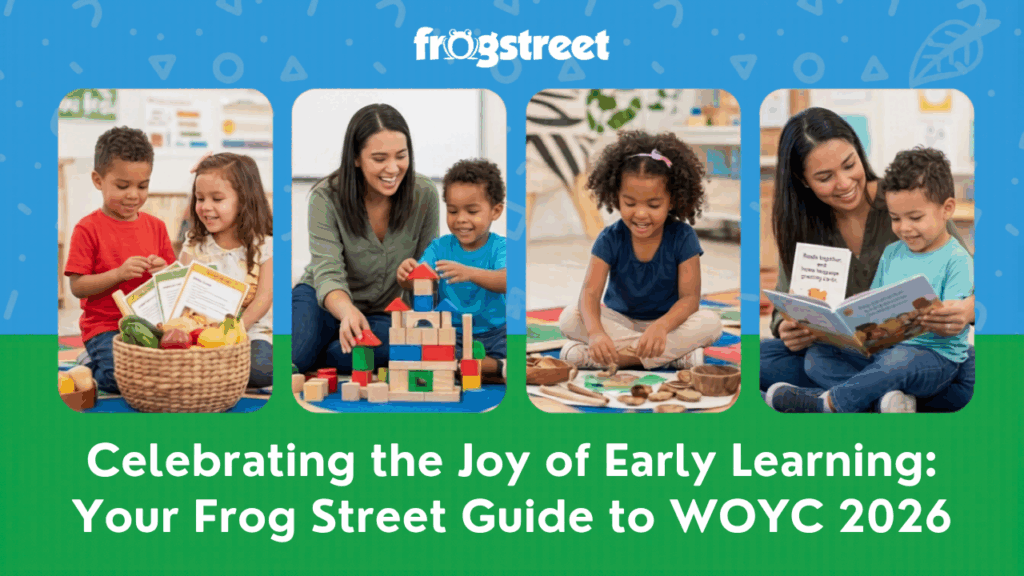
The Week of the Young Child (WOYC) is a meaningful opportunity for educators to celebrate early learning, strengthen classroom connections, and engage families. If you are planning Week of the Young Child 2026 activities, this guide offers simple, flexible ideas you can use across infant, toddler, preschool, and Pre-K settings to support development, encourage participation, and create joyful learning experiences. For educators, WOYC is more than a themed week. It is a chance to create experiences that help children feel connected, confident, and actively engaged in their learning. At Frog Street, we believe those moments happen when learning is hands-on, meaningful, and reflective of each child’s unique identity, language, and experiences. Music Monday Activities | April 13 Music supports language development, memory, and self-expression while helping children connect with others in joyful and meaningful ways across early childhood settings. Try this: Create a classroom music experience where children choose how they want to participate. Younger children may explore sounds and movement, while older children might sing, clap, use instruments, or create their own rhythm patterns. Invite children to share a favorite song from home or introduce music in their home language. How this supports learning: Music builds vocabulary, strengthens memory, and supports self-expression while helping children feel seen and included. Tasty Tuesday Activities | April 14 Food-based learning connects literacy, math, and science in ways that feel natural and relevant to children’s daily experiences. Try this: Guide children through a simple food or snack experience. Younger children can explore textures and observe, while older children can help choose ingredients, follow picture recipe steps, scoop, pour, mix, and serve. Invite families to share foods or ingredients that reflect their culture or traditions. How this supports learning: Hands-on food experiences build vocabulary, support sequencing and problem-solving skills, and create meaningful connections between home and school. Work Together Wednesday Activities | April 15 Collaborative learning experiences help children build communication, cooperation, and problem-solving skills while learning how to interact with others. Try this: Invite children to work together to create or build something that reflects their environment or experiences. Younger children may explore side-by-side play, while older children can take on roles to design and build shared spaces. How this supports learning: Collaboration supports social and emotional development, encourages communication, and helps children practice sharing ideas and solving problems. Artsy Thursday Activities | April 16 Open-ended art experiences support creativity, fine motor development, and self-expression while giving children the freedom to explore their ideas. Try this: Offer a variety of materials such as paint, paper, fabric, or natural items. Younger children may explore materials through sensory play, while older children can create representations of their experiences, families, or favorite places. How this supports learning: Process-focused art builds confidence, supports communication, and encourages children to express their identity in meaningful ways. Family Friday Activities | April 17 Families are children’s first and most important teachers. Creating opportunities for family participation strengthens connection and builds a sense of belonging. Try this: Invite families to participate in ways that work for them. This may include sharing a story, song, or message. Children can help decide how their family is included, creating a more meaningful connection. How this supports learning: When families are included, children feel supported, valued, and more connected to their learning environment. Why Week of the Young Child Activities Matter The Week of the Young Child is more than a celebration. It is an opportunity to: Support active, hands-on learning Strengthen relationships in the classroom Reflect children’s cultures and identities Build meaningful family engagement The most impactful Week of the Young Child activities are those that give children voice, choice, and opportunities to connect their learning to real experiences. Frequently Asked Questions About Week of the Young Child What is the Week of the Young Child? The Week of the Young Child is an annual celebration focused on recognizing the importance of early childhood education and the role educators and families play in supporting young children’s development. When is Week of the Young Child 2026? Week of the Young Child 2026 takes place in April, with themed days such as Music Monday, Tasty Tuesday, Work Together Wednesday, Artsy Thursday, and Family Friday. What are examples of Week of the Young Child activities? Examples include music and movement activities, food exploration, collaborative play, open-ended art, and family engagement experiences that connect learning to children’s real lives. Creating Meaningful WOYC Experiences in Your Classroom As you plan your Week of the Young Child 2026 activities, focus on creating experiences that are engaging, inclusive, and meaningful for every child. When children are given opportunities to explore, make choices, and connect their learning to their own experiences, they become more confident, more engaged, and better prepared for what comes next. How will you bring Week of the Young Child to life in your classroom this year? Written by Jessica Hammond, Ed.D., Senior Director of Learning and Development, Frog Street
How Developmental Continuity Strengthens Pre-K Readiness Outcomes
You may already see how development carries forward across your classrooms. Children enter new environments with confidence, curiosity, and familiar learning habits that support their participation in daily routines. When classrooms reinforce shared routines, language, and expectations, children build on experiences they already understand. Development grows steadily as children move through each stage of early learning. Developmental continuity creates this connected pathway. When birth-to-five classrooms align intentionally, children carry their skills forward from one classroom to the next, and Pre-K readiness becomes the natural result of years of development. These connections allow teachers to extend learning earlier and help children move confidently into each new stage of their early learning journey. Why Developmental Continuity Matters for Pre-K Readiness Developmental continuity helps children build skills gradually from infancy through Pre-K, allowing them to enter Pre-K classrooms confident, curious, and ready to participate in learning. You may recognize this progression when children move easily between classrooms. Children settle into routines quickly because they recognize the structure of the learning environment. This familiarity allows teachers to extend learning earlier in the year. Programs that support pre-k readiness continuity observe encouraging patterns. Children enter new classrooms with curiosity and confidence. Teachers extend learning rather than reintroducing basic routines. Emotional language remains familiar across age groups. Classroom participation begins quickly. Children demonstrate growing independence. When your classrooms reinforce development across age groups, children carry learning momentum forward. When Learning Builds Across the Birth-to-Five Journey Children experience development as a connected pathway. Each classroom reinforces earlier experiences while introducing new opportunities for growth. You may notice how children apply familiar learning habits as they encounter new activities and materials. Birth-to-five curriculum alignment allows children to strengthen skills over time as learning experiences expand across infancy, toddlerhood, preschool, and Pre-K. Teachers guide this progression through intentional routines and learning environments. This alignment supports early childhood developmental progression and strengthens scaffolding. Children practice skills repeatedly while expanding their understanding through new experiences. When classrooms build on one another’s work, children experience learning as a continuous journey. Confidence grows alongside curiosity. How Does Birth-to-Five Curriculum Alignment Support Development? Birth-to-five curriculum alignment supports development by connecting learning experiences across classrooms, so children strengthen skills over time rather than having to restart them each year. Teachers reinforce shared developmental goals while adjusting activities for each stage of growth. When your educators understand how learning evolves across age groups, they can more intentionally extend children’s skills. Aligned classrooms often share several characteristics. Emotional language appears consistently across classrooms. Learning experiences gradually increase in complexity. Teachers reference earlier classroom routines and expectations. Children recognize how classroom activities unfold. Development grows through reinforcement rather than repetition. These patterns support integrated early childhood curriculum design and help children understand how learning works across environments. The Language That Helps Children Feel Secure Language shapes how children understand classroom experiences. When your educators use consistent language to guide emotions, routines, and expectations, children recognize how to respond in new situations. Shared vocabulary across classrooms strengthens SED alignment across age groups. Children carry emotional language with them as they move from one classroom to the next. Teachers often observe that this consistency strengthens peer interactions. You may notice children using familiar emotional vocabulary to solve problems, express feelings, and participate in group routines. This shared language supports confidence and independence across the early years. What Helps Children Transition Confidently Between Classrooms? Children transition more confidently when routines, expectations, and emotional language remain consistent across classrooms. Transitions mark important milestones in early childhood programs. Children move into new classrooms as their abilities grow. When your classrooms share familiar structures, children recognize how the learning environment works. Strong toddler-to-preschool transition support helps children maintain learning momentum. Children respond quickly to transition cues. Classroom participation begins early in the year. Emotional regulation remains steady during adjustment periods. Teachers begin extending learning quickly. Children explore materials and activities confidently. These signals show how continuity in infant-toddler preschool curricula supports smooth classroom transitions. Recognizing the Signals of Developmental Alignment Teachers often recognize developmental continuity through everyday classroom interactions. Children demonstrate skills that reflect experiences from earlier environments. You may see these signals during routines, group activities, and peer interactions. Programs that support infant-toddler preschool curriculum continuity often notice encouraging patterns. Children recognize familiar routines and expectations. Emotional vocabulary appears during peer interactions. Children begin activities confidently without extended explanation. Teachers expand learning rather than revisiting earlier skills. Classroom environments feel engaged and collaborative. When you observe these patterns, you are often seeing early childhood developmental progression in action. Helping Families See the Developmental Journey Families appreciate understanding how early learning supports long-term development. Parents often want to see how experiences in your classrooms prepare children for the next stage of learning. Programs that support integrated early childhood curriculum alignment help families understand the full developmental pathway. Teachers can explain how communication, emotional awareness, and independence strengthen across the years. This clarity strengthens trust between families and educators. When families understand the developmental journey, they often feel more confident supporting their child’s learning at home. Frequently Asked Questions What is developmental continuity in early childhood education? Developmental continuity means learning experiences connect from infancy through Pre-K. Children build skills gradually across classrooms instead of restarting learning at each stage. Familiar routines and language help children move confidently between classrooms. Why is birth-to-five curriculum alignment important? Birth-to-five curriculum alignment ensures that learning builds across age groups. Teachers reinforce developmental skills over time so children experience a consistent learning journey. How does developmental continuity support Pre-K readiness? Developmental continuity supports Pre-K readiness by strengthening communication, emotional development, and independence across the early years. Children enter Pre-K prepared to participate in collaborative learning. What helps children transition smoothly between classrooms? Children transition smoothly when routines, language, and expectations remain familiar. Consistent cues help children recognize classroom patterns and adapt quickly. How can educators improve classroom alignment? Educators strengthen alignment by sharing developmental language, collaborating across classrooms, and reinforcing SED strategies that children recognize as they grow.
Embedding Social-Emotional Development Consistently Across Age Groups: What It Takes and Why It Matters
By spring, you may begin noticing how development carries across your classrooms. Daily routines feel established, teachers know the children in their care well, and transitions during the day often run smoothly. This is often when leaders begin looking more closely at how learning connects across the birth-to-five journey. In many programs, these connections appear in small moments. A child may enter your preschool classroom and immediately respond to emotional language they learned as a toddler, while another independently uses a calming strategy introduced earlier in the year. These observations show how development can carry forward across age groups. You may also notice moments that raise questions. A teacher may spend extra time explaining routines children practiced earlier, or a classroom may introduce emotional strategies children have already encountered. These patterns often highlight opportunities to strengthen SED alignment across age groups, enabling development to build naturally across your program. Social-Emotional Development Grows Gradually Across the Birth-to-Five Years In your program, SED unfolds gradually across the early years. It begins in the smallest interactions children experience and grows through daily classroom routines. Infants begin building emotional security through responsive relationships and predictable caregiving. As children move into toddler classrooms, they begin practicing simple strategies to calm their bodies and express their feelings. Preschool classrooms expand these abilities through peer interaction and language development. By the time children reach Pre-K, they are practicing empathy, cooperation, and collaborative problem solving. This progression represents early childhood developmental scaffolding, in which each classroom builds on the experiences that came before it. When your classrooms align around shared emotional language and routines, children recognize familiar strategies and apply them more independently as they grow. Signs That Emotional Learning Is Progressing Across Classrooms Children recognize emotional vocabulary used to guide regulation Teachers reinforce calming strategies that children practiced earlier Classroom routines feel predictable when children transition Children approach challenges with curiosity and confidence These signals often appear in programs that intentionally support alignment with the birth-to-five curriculum. Where Do Alignment Gaps Often Appear Between Classrooms? Even in strong programs, you may occasionally notice pauses in development during transitions between classrooms. These moments often appear when emotional language or classroom expectations change between age groups. For example, one classroom in your program may encourage children to “take a calm breath” when frustration appears. Another classroom may describe the same strategy using different words. Although the goal remains the same, children sometimes need time to recognize the new phrasing. This shift can slow developmental momentum and require teachers to reintroduce strategies that children have already practiced. These moments do not indicate a problem with children’s development. Instead, they often reveal opportunities to strengthen the continuity of the infant-toddler preschool curriculum across your program. When educators share consistent language and routines, children respond more quickly, and transitions feel more predictable. Signals That Alignment Could Be Strengthened Children pause and observe classmates before beginning activities Teachers spend additional time explaining routines Emotional vocabulary varies between classrooms Families ask how learning connects across age groups These signals often reveal opportunities to strengthen the continuity of the infant-toddler preschool curriculum, enabling learning to build naturally across classrooms. How Does Consistent SED Support the Toddler-to-Preschool Transition? The toddler-to-preschool transition support stage often reveals how well classrooms connect. Children entering preschool from aligned programs frequently demonstrate familiarity with emotional routines. They recognize cues that signal transitions or calming strategies. Teachers may notice children using words to describe feelings or asking for help during moments of frustration. This familiarity helps children participate confidently in the classroom community. When foundational strategies are already in place, teachers can focus on expanding emotional understanding rather than introducing regulation from the beginning. What Smooth Transitions Often Look Like Children respond quickly to familiar cues during transitions Teachers use emotional language that children already understand Children return to learning after brief moments of frustration Peer interactions show growing empathy and cooperation These experiences strengthen early childhood developmental progression and help children adapt to new learning environments. Why Do Social-Emotional Skills Play a Major Role in Pre-K Readiness? Pre-K readiness involves much more than early academic skills. Social-emotional development shapes how children participate in classroom learning and relationships. Children who practice emotional strategies across several years often feel more confident in structured learning environments. They collaborate with peers, follow classroom routines, and persist through challenges. These abilities support continuity of pre-K readiness, as children enter Pre-K with emotional tools already in place. Social-Emotional Skills That Support Learning Managing emotions during challenging moments Participating in cooperative play and group discussions Following routines and transitions confidently Communicating needs and ideas clearly When these skills develop consistently across classrooms, teachers can focus on expanding learning experiences rather than introducing foundational regulation strategies. Strengthening Alignment Across the Entire Program Many leaders begin strengthening alignment by observing how children carry learning habits from one classroom to another. In your program, you might notice that children already respond to certain phrases to calm their bodies or transition between activities. These everyday observations reveal how earlier classroom experiences continue shaping development. Conversations between teachers often make these connections clearer. When educators discuss which strategies children respond to most naturally, they begin to see how emotional learning evolves across age groups. Mapping developmental progression across classrooms can also help your team visualize how learning expands from infancy through Pre-K. This process supports stronger integrated early childhood curriculum planning and helps teachers extend learning rather than restart it. When your classrooms reinforce shared language and expectations, children experience the early years as a connected developmental journey. A Simple Reflection Leaders Can Begin Today Many programs discover that alignment already exists within everyday classroom practices. Teachers often use similar emotional strategies, even when they have not formally connected them across age groups. You may begin noticing these connections by observing the language your teachers use during routines, transitions, and moments of frustration. When similar strategies appear across classrooms, they reveal how development already carries forward. Small adjustments to shared vocabulary or